
 Commercial Surface Systems · Specialist Division
COMMERCIAL by Hinchliffe
Commercial-grade surfacing, engineered for load and longevity. Car parks, industrial yards, commercial resin, highways, schools and public realm.
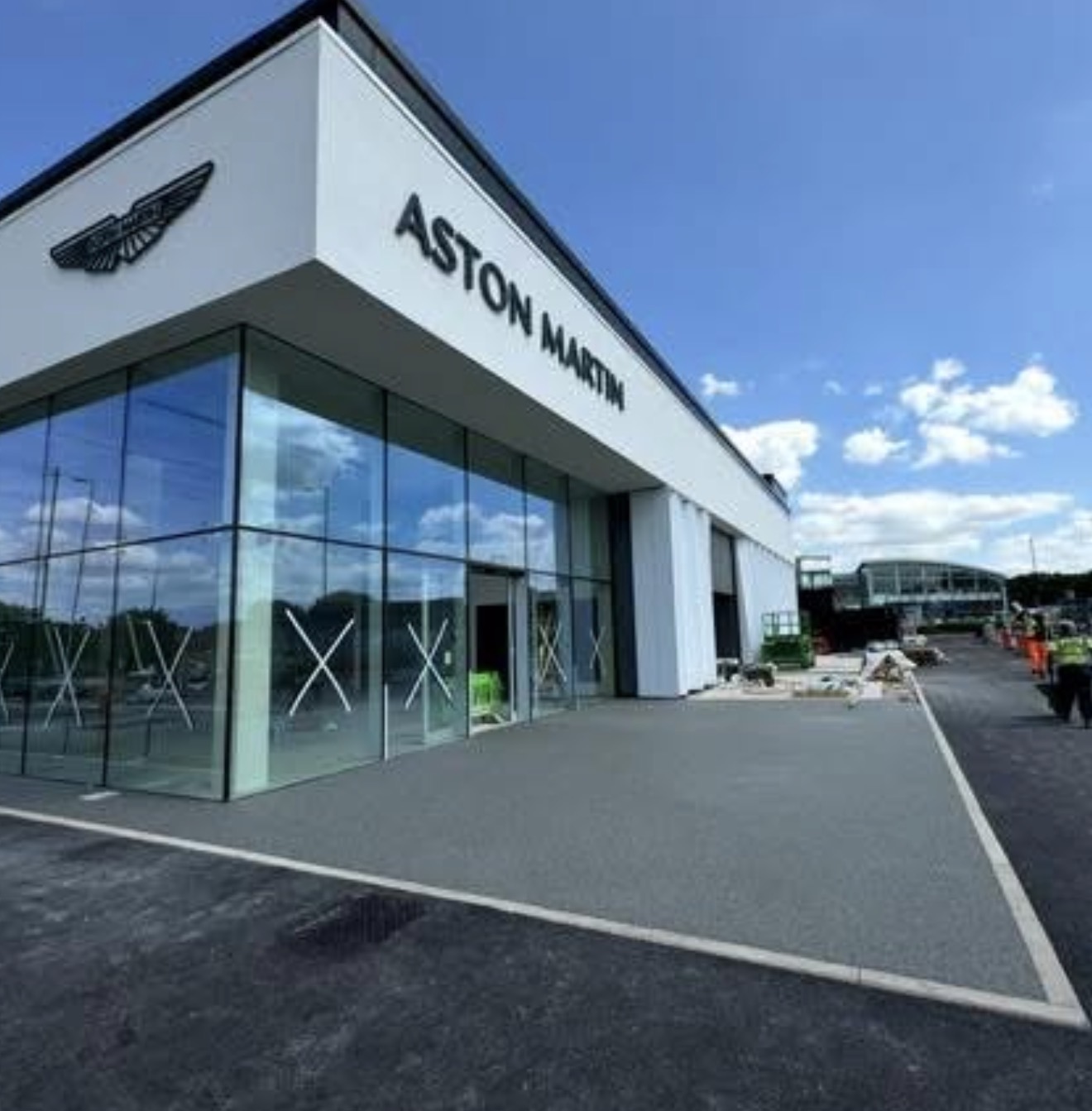
Every commercial by hinchliffe install is engineered using recognised pavement-construction principles and relevant BS 7533 guidance, survey, engineered sub-base, edge restraints and approved surface systems.
Our commercial division delivers car parks, industrial yards, highways, schools and public realm surfacing. Every project engineered from the sub-base up to handle real commercial loads, traffic and lifespan requirements.
Specialist surface options
Rubber crumb play surfacing
A play-area surfacing option for schools and outdoor spaces. Depth, base construction and any required performance criteria must be confirmed for the specific site and intended use.
Best for
- →Facilities managers and main contractors
- →Public sector and education projects
- →Industrial and logistics sites
Commercial surfacing & groundworks
Delivered for main contractors, developers, property managers, commercial property owners, schools, estates and facilities teams.
Capabilities
Packaged individually or as a combined external works scope.
- 1Asphalt surfacing
- 2Car parks
- 3Private roads
- 4Hardstanding
- 5Groundworks
- 6Drainage
- 7Kerbing
- 8External works
- 9Resurfacing
- 10Line marking coordination
A commercial pavement is a managed asset, not a purchase
Commercial buyers are not choosing a driveway. They are managing an asset that has to carry known traffic, stay open while work happens, satisfy the people who use it, and not come back as a cost in three years. The decision is made on specification, programme control, risk and documentation as much as on rate.
Our position is straightforward. We are an engineering-led surfacing contractor working from Sandbach across Cheshire and the North West. Our commercial capability is demonstrated through assessment, specification, project controls and documentation rather than through a list of landmark contracts we have not carried out.
Where a scheme is outside our capability or requires credentials we do not currently hold, we will say so at enquiry stage rather than at delivery stage.
Assessment and specification
- →Existing pavement condition: deformation, cracking, ravelling, patch history and localised failure.
- →Whether defects are surface-level or evidence of inadequate construction beneath.
- →Drainage performance, ponding, blocked or damaged gullies and outfall condition.
- →Ironwork, covers, kerb lines, delineation and interfaces with buildings and the highway.
- →Vehicle types and frequency: cars, vans, refuse and delivery vehicles, HGV, plant, static or point loads.
- →Movement patterns: turning areas, aisles, bay entries, loading bays and gate lines, where stress concentrates.
- →Whether loading is changing, for example a new use, additional units or increased servicing.
- →Specification designed against actual traffic rather than against a general category.
- →Access for plant, deliveries and haulage, including height, width and gate restrictions.
- →Operational hours, whether the site can close, and where out-of-hours or weekend working is necessary.
- →Adjacent occupiers, public interface, pedestrian routes and parking that has to remain available.
- →Existing services, ducting and any restrictions on excavation depth.
Delivery, phasing and site control
- →Works divided into phases so access, parking and servicing are maintained where the site cannot close.
- →Sequence agreed in advance with a named point of contact, with dependencies and weather-sensitive activities identified.
- →Programme issued in writing and progress reported through delivery rather than on request.
- →Working areas segregated from vehicles and pedestrians, with routes, signage and access maintained.
- →Risk assessments and method statements provided for the works.
- →Site inductions and coordination where working under a principal contractor.
- →Public and occupier interface managed as part of the method, not left to the crew on the day.
- →Deliveries, plant movement and haulage scheduled around site operating hours and access constraints.
- →Arisings removed under controlled haulage; materials scheduled to the construction sequence.
- →Storage, welfare and compound arrangements agreed before mobilisation.
- →Written specification setting out scope, construction, materials and exclusions before commitment.
- →Site records maintained through delivery, with progress and works carried out documented.
- →Variations issued in writing with reason and cost, and agreed before the work proceeds.
- →Documented handover including what was built, the guarantee position and the maintenance requirement.
Commercial works we deliver
- →Asphalt car parks, service yards, access roads and hardstanding, machine laid where access allows.
- →Surface course overlay where the pavement is structurally sound.
- →Partial or full reconstruction where the construction is inadequate for the loading.
- →Modular pavement and block paving where appearance, reinstatement access or permeability lead the decision.
- →Excavation, formation, capping, separation and structural sub-base construction.
- →Surface water drainage: channels, gullies, interception, pipework, chambers and outfall connection within agreed scope.
- →Kerbing, edge restraint, level correction and cover adjustment.
- →Localised reconstruction, defect and pothole repair, joint sealing and edge reinstatement.
- →Drainage clearance and correction where ponding is shortening pavement life.
- →Condition inspection and planned maintenance programmes through Surface Care so budget can be planned rather than reacted to.
Repairs and maintenance are offered where they are the correct answer. Where a repair will not resolve the underlying cause, we report that rather than carrying out work that will need repeating.
What reduces risk for a commercial client
Commercial risk is mostly about disruption, unexpected cost and having to do the work again.
Written scope, construction and exclusions issued so the tender is comparable and the outcome is defined.
Sequencing that keeps the site operating, agreed before mobilisation.
No verbal variations. Change is written, reasoned, priced and agreed before it happens.
Records of what was constructed, the guarantee position and the maintenance requirement.
Inspection and maintenance programmes so pavement spend can be budgeted across years rather than triggered by failure.
Comparing commercial tenders properly
Where commercial quotations differ significantly, the difference is nearly always in scope rather than in rate. These are the items worth checking on any tender, including ours.
What granular and bound layers are included, and against what loading they have been specified.
Whether drainage works, connections and level correction are included or excluded.
Excavation volume, disposal and haulage, and how unforeseen ground is treated.
Whether the programme keeps the site operational, and whether that is priced.
What sits outside the price, which is where most unexpected cost originates.
Site records, handover and the guarantee position on completion.
We assess the existing construction, ground conditions, levels, drainage, access and intended loading before recommending the correct surface system.
Related reading
How every Hinchliffe pavement is assessed, specified and constructed.
Excavation, formation, levels, drainage and restraint.
Structural asphalt pavements and resurfacing.
Planned inspection, cleaning and maintenance.
Approved systems, insurance, competency and guarantees.
Send project details for a contractor-level response.
The questions worth asking of any quotation, including ours.
Ground conditions and local detail across Cheshire.
COMMERCIAL by Hinchliffe, your questions.
What commercial projects do you take on?
Car parks, industrial yards, logistics hardstandings, school and healthcare grounds, public realm surfacing, private estates and main-contractor sub-packages. We work from single-visit repair jobs up to full civils packages with drainage, kerbing, surfacing and line marking.
Do you work with main contractors and facilities managers?
Yes, a large part of our commercial work is sub-package delivery for main contractors, and planned/reactive works for facilities teams. We supply RAMS, insurance documentation and programme up-front, and hand over as-builts on completion.
Are your commercial installations warranted?
Yes. Commercial resin and tarmac systems carry manufacturer material warranties on top of our workmanship guarantee. Warranty length depends on the system specified, we confirm this in writing before works start.
Can you work out of hours to keep sites operational?
Yes. Retail, healthcare and logistics sites often need overnight or weekend works to avoid disrupting operations. We programme phasing, temporary access and traffic management accordingly.
Do you handle drainage and line marking as part of a scheme?
Yes, commercial schemes are delivered as a full package: excavation, drainage, sub-base, kerbing, surface, line marking and signage where needed. One contractor, one accountability line, one programme.
Can the site stay open while the work is carried out?
Usually, through phasing. The works are divided so access, parking and servicing are maintained, with segregation, signage and routes managed as part of the method. Where a full closure or out-of-hours working is more efficient or safer, we set that out at proposal stage with the programme implications.
How do you specify a car park or yard surface?
From a condition survey and the actual traffic. Vehicle types, frequency, turning and loading points, drainage performance and the condition of the existing construction determine whether the answer is overlay, partial reconstruction or full reconstruction, and determine the layer thicknesses and materials. There is no standard commercial build-up that suits every site.
How are variations handled?
In writing, with the reason and the cost, agreed before the work proceeds. Ground conditions are the most common cause. Our proposals state the assumptions being priced so that a change is visible against a baseline rather than appearing on the final account.
What documentation is provided?
A written specification before commitment, risk assessments and method statements for the works, site records through delivery, written variations, and a documented handover setting out what was constructed, the guarantee position and the maintenance requirement.
Do you work under principal contractors and managing agents?
Yes. We work directly for businesses, managing agents, property managers, estates, schools, facilities managers and developers, and as a subcontractor under principal contractors, with site inductions, coordination and documentation as required.
What is your commercial track record?
We are an established Cheshire surfacing contractor and we present our commercial capability through assessment, specification, project controls and documentation rather than by overstating project history. We are happy to discuss the specific work relevant to your scheme, and where a project is outside our capability we will tell you at enquiry stage.
Commercial surfacing
For suitable larger-area resurfacing projects.
For suitable overlay projects.
Commercial rates vary according to area, pavement loading, traffic management, phasing, asphalt tonnage, plant access, line marking, drainage, ironwork and testing requirements. Formal quotations are issued against an agreed scope or tender documentation. Residential minimum project values are not applied to commercial tenders.
The rates above cover the surfacing system itself. Everything below the surface, and everything site-specific, is measured and calculated separately in the Hinchliffe Project Builder™ process.
- Excavation, formation preparation and compaction
- Spoil removal, haulage and tip disposal
- Sub-base supply, laying and testing
- Drainage, soakaways, linear channels and SUDS provision
- Kerbs, edgings, retaining structures and level changes
- Service covers, utility alterations and manhole adjustment
- Restricted access, plant hire and site complexity allowances
- Mobilisation, welfare, traffic management and risk allowances
Guide prices are not quotations or contractual offers. Final pricing is issued only after site assessment, measured quantities and confirmation of the construction specification. Prices exclude VAT unless expressly stated otherwise. Unforeseen ground conditions, concealed services, contamination and client-requested changes are managed under the written contract and variation procedure.
Request a measured site assessmentCommercial Surfacing by town
Ground conditions change from one Cheshire town to the next. Pick your area to see how we build there, what we typically find below the surface and what it usually costs.
Customer proof
"Dan came out to provide a quote for a driveway replacement including an extension to the existing driveway. We found Dan to be highly professional, very informative and the detailed quote enabled us to understand the cost breakdown precisely. It was easy to discuss options and benefits of each with Dan and his product knowledge was superb. From first point of contact we were highly impressed."
"We were really impressed with the project management, the team kept the neighbours informed throughout the job and everything ran smoothly from start to finish. A five-star service."
"Dan and the team were professional from start to finish. The workmanship was outstanding and the driveway has completely transformed our home. Highly recommend."